



How a Topic Entity Update Increased AI Visibility 10.8%
AI search is changing how brands get discovered.
For this local home builder in Bend, Oregon, we wanted to see whether a smarter content structure could help AI systems better understand the brand without a big redesign or heavy content push.
It did: after building one focused category page and reorganizing supporting content around that topic, AI visibility scores improved across four models.
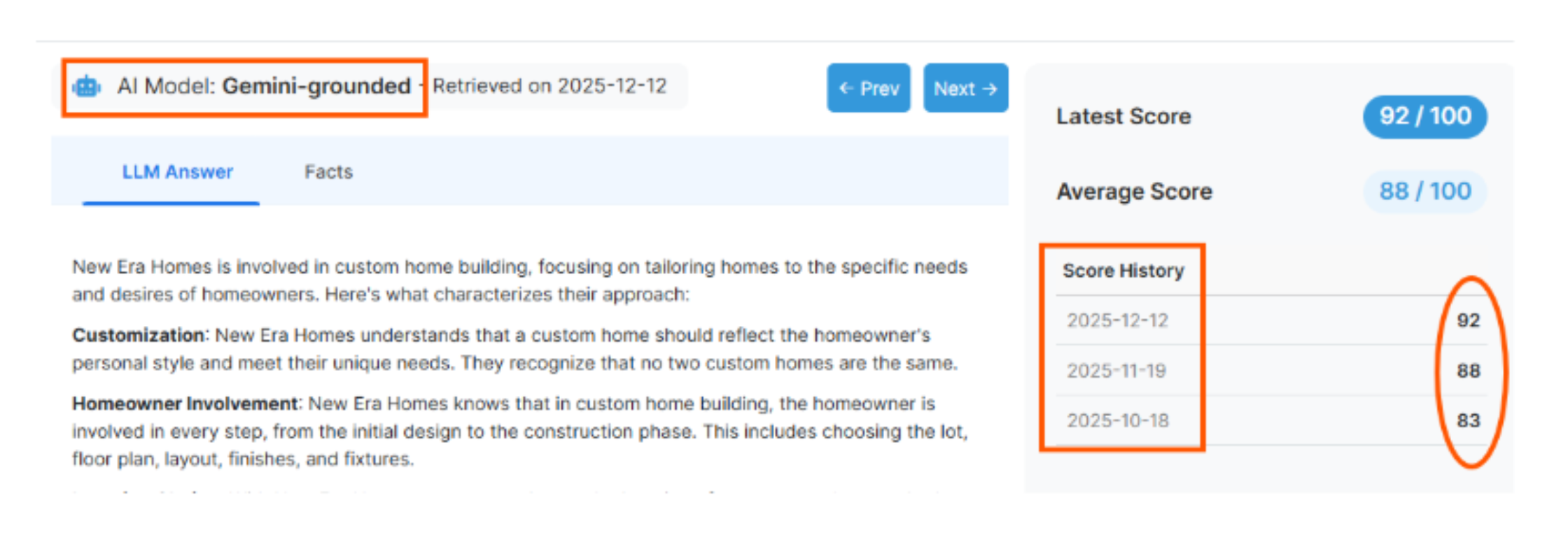
After building one focused category page and reorganizing supporting content around that topic, AI visibility scores improved across nearly every model we tracked. Gemini-grounded improved the most, up 10.8%, while ChatGPT, Sonar, and Gemini also showed gains. Claude did not improve, which shows this work does not affect every model the same way.
Client Snapshot
- Client: Local custom home builder in Bend, Oregon
- Site size: Small local business site with a modest content footprint
- Goal: Help AI systems better connect the brand to custom home building in Bend without relying on a massive content library or enterprise-level authority
The Challenge
The site had relevant content, but it was scattered. There was no strong central page tying together the brand, the service, and the location. That matters in AI search because models are more likely to understand and repeat clear patterns than piece together meaning from disconnected pages.
Our hypothesis was simple: if we gave the site a stronger content hub around a single priority topic and connected supporting content to it, AI systems would become more confident in associating the brand with that topic.
What We Changed
On October 24, 2025, we implemented a focused entity-building update for one priority topic. That included:
- Researching and defining the target topic entity
- Creating a new category page around that entity
- Reorganizing legacy blog content to support that page and reinforce the topic cluster
This was not a full redesign. It was a structure-first update designed to make the site easier for AI systems to interpret.
How We Measured Impact
We used Waikay to track how well different AI models understood and associated the brand with the target topic over time. In plain English: the score shows how clearly a model connects the business to the topic we wanted it known for. Higher scores mean the model is pulling more accurate, on-brand information instead of guessing or missing the connection.
We compared scores before the update on 10/18/2025 with those after the update on 12/12/2025.
Results
AI visibility improved across all four models we tracked following the topic-entity update.
| AI Model | Before | After | Change | % Increase |
| Sonar Pro | 86 | 92 | +6 | +6.98% |
| ChatGPT 4.1 | 84 | 92 | +8 | +9.52% |
| Gemini 2.5 | 83 | 89 | +6 | +7.23% |
| Gemini-grounded 2.5 | 83 | 92 | +9 | +10.84% |
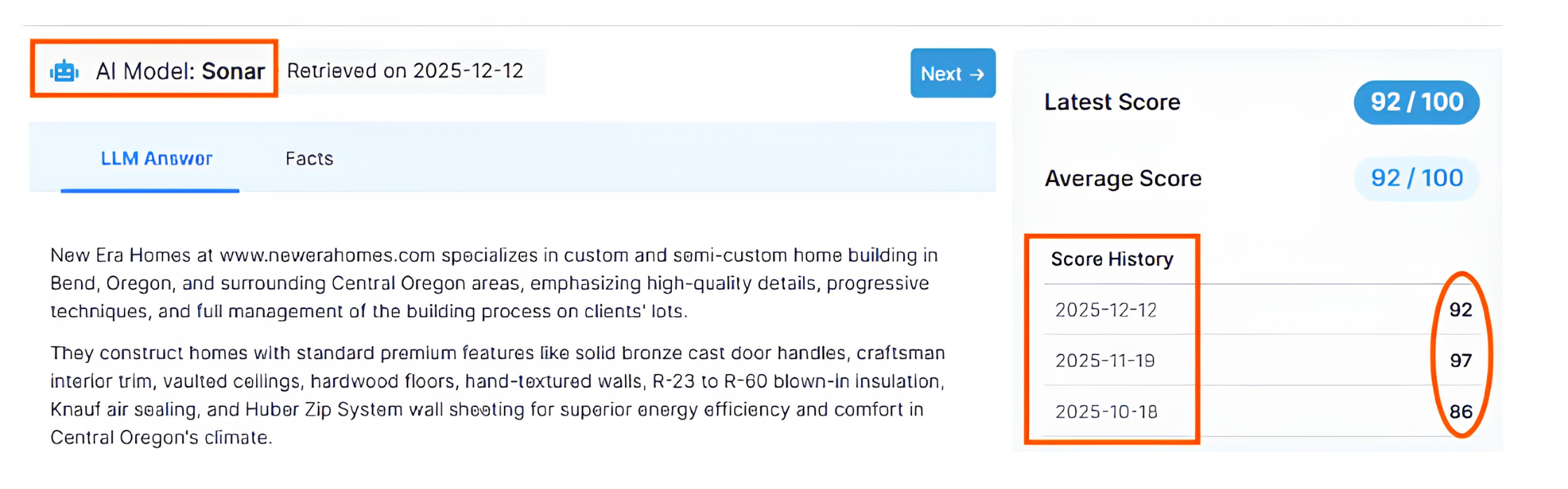
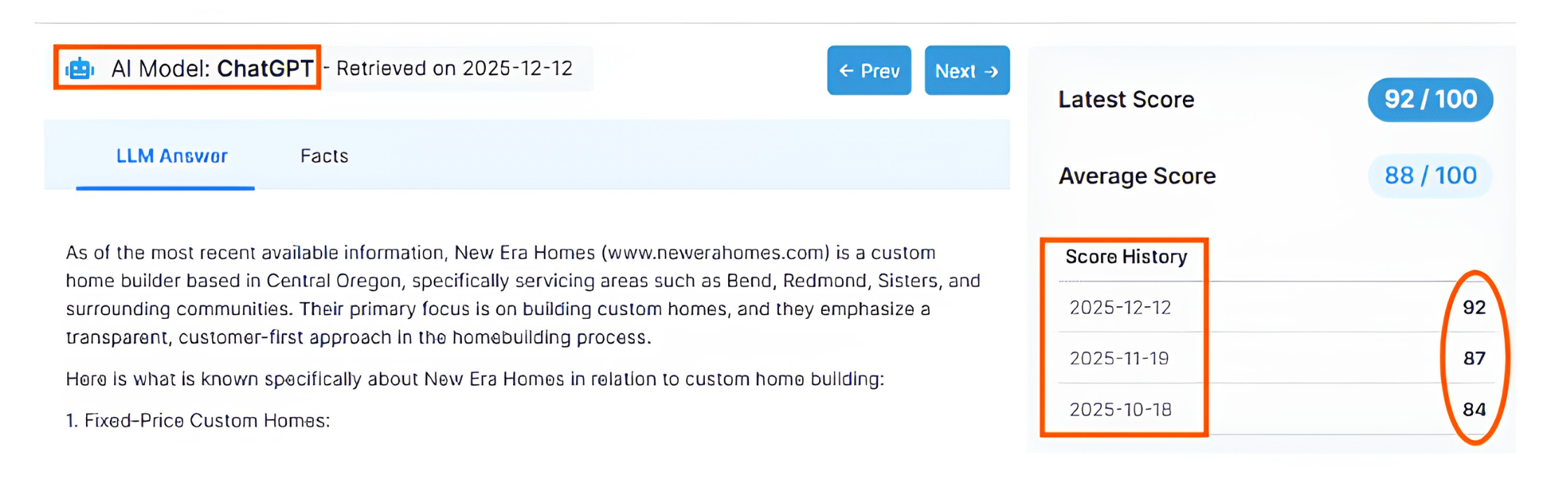
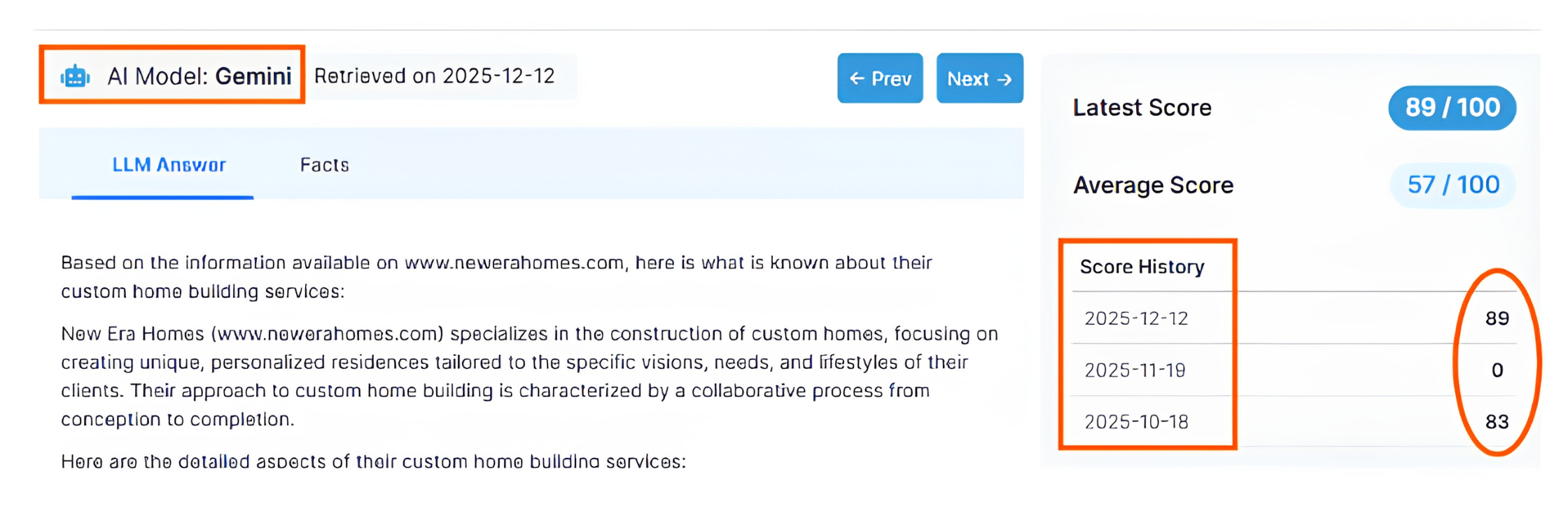
Across Sonar, ChatGPT, Gemini, and Gemini-grounded, the
brand-topic connection got stronger after the structural update.
What the Results Mean
This is what makes the test worth paying attention to: the lift came from a structure update, not a major redesign, not a giant content sprint, and not a link campaign.
For a small local site, that matters.
It shows that when you make the relationship among brand, service, and location easier for AI systems to understand, they can return more accurate and more confident answers. In this case, one focused topic entity update helped multiple models better connect the brand to custom home building in Bend.
That is a meaningful result because this is the kind of work smaller brands can actually do. They do not need enterprise budgets to improve their understanding of AI. They need clearer topic architecture.
Why This Case Study Matters
A lot of AI search conversation still makes it sound like only huge brands can shape visibility.
This case study pushes back on that.
Here, a small local builder improved AI visibility by tightening one topic cluster and strengthening the site’s internal content relationships. No full redesign. No giant content expansion. No big link push. Just a clearer structure that helped AI systems understand what the brand should be known for.
That matters because it gives smaller businesses a realistic path forward. If AI models are struggling to connect your brand to an important topic, the answer is not always “make more content.” Sometimes the better move is to organize what you already have so the topic is unmistakable.
Want to see how SEO testing can move the needle?
Schedule a discovery call with RicketyRoo
to start testing smarter and making data-backed SEO decisions.