


You can spin up a dozen blog posts before lunch now. Fire up your AI of choice, drop in a prompt, click generate, and suddenly you have a content calendar for the month.
The problem is that most of that content feels the same.
Across industries, we’re drowning in competent, interchangeable articles. They hit the right keywords, follow the same structures, and say roughly what every other article says. Some of those pieces rank for a bit. Fewer earn actual trust.
Almost none get remembered.
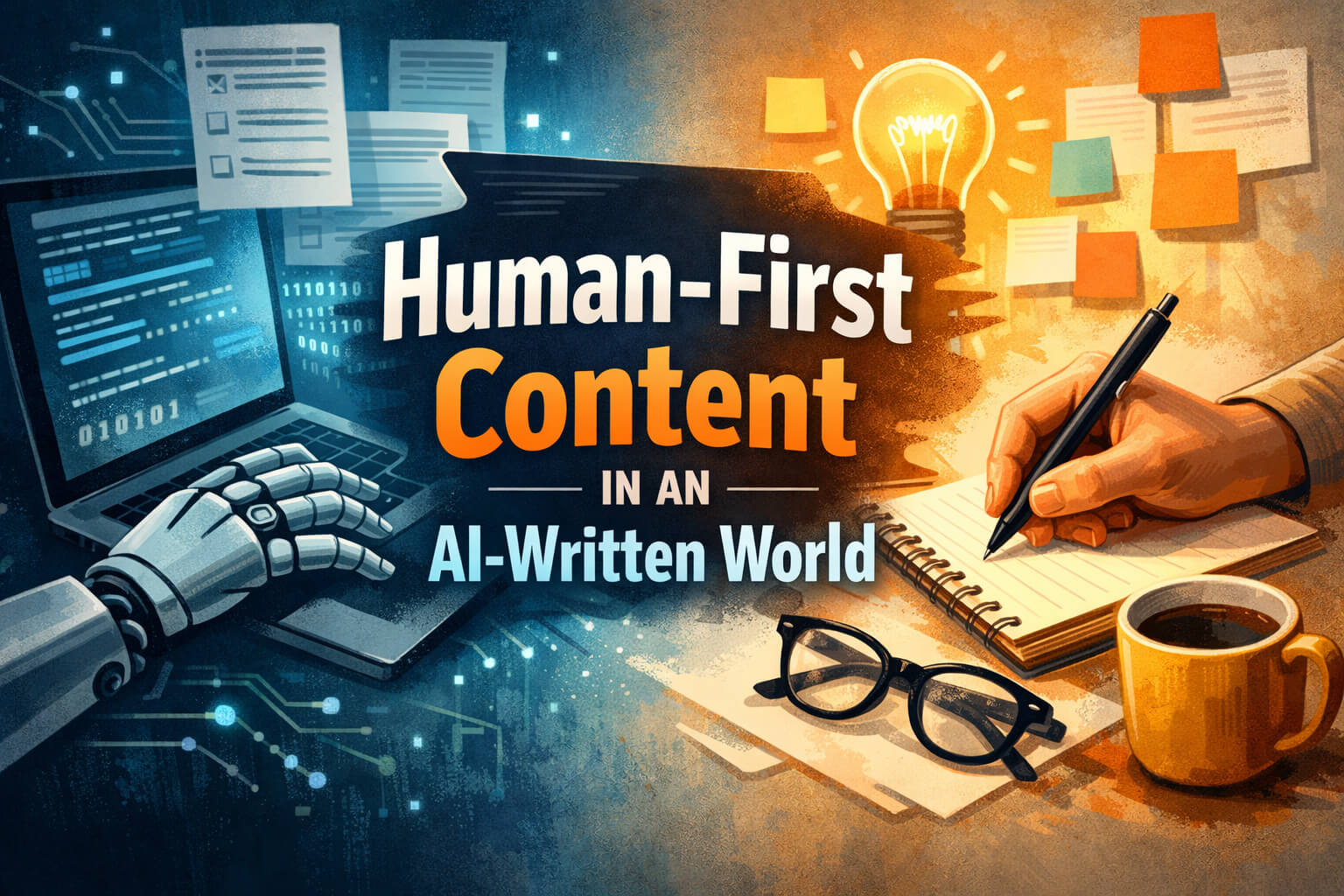
The brands that win are the ones layering a human perspective on top of AI assistance. They use AI like ChatGPT, Claude, Gemini, and other LLM models for speed and support, but the voice, opinions, and experiences still come from an actual person.
The rest are filling the internet with disposable content that might spike traffic for a week and then quietly die.
So, if publishing is easier than ever, why are so many brands still struggling to turn content into links, leads, and long-term authority?
When Everyone Can Publish, Most Content Becomes Disposable
AI dropped the cost of “getting something written” almost to zero. That sounds like a dream for busy teams, until you look at what floods out the other side.
A typical AI-generated article on “best project management tips” might open with a broad statement about how project management is important, list ten generic tips, and wrap up by reminding you to stay organized and use the right tools.
It’s not wrong. It’s just forgettable.
You can feel this sameness in the search results, too. Run almost any non-niche query, and you get multiple articles that read like slightly shuffled versions of each other. Same headings. Same advice. Same “practical tips” that never get specific enough to stick.
Readers have learned how to handle that kind of content. They skim fast. They grab one detail if they have to, then bounce. They don’t bookmark. They don’t send it to someone. They don’t remember who wrote it.
This is the core shift AI introduced. It made content production faster, but it also made generic content painfully obvious.
The real gap now isn’t “do you have a blog post on this topic.” The gap is “would anyone notice if your post disappeared.”
That’s the problem we’re actually solving for when we talk about human-first content.
Ranking Once vs. Earning Ongoing Value
Many teams quietly optimize for the wrong win. They celebrate when a new post hits page one for a target keyword, then move on.
Traffic is good. Traffic that turns into something is better.
Ranking content is built to hit keywords and structure. It often has little to say beyond what’s already out there. Authority content still cares about keywords, but it brings something extra: original insight, real experience, or an angle only your brand could take.
I see this play out constantly. A B2B SaaS company pushed out a batch of AI-assisted blog posts targeting bottom of funnel keywords. One climbed quickly for a competitive search term. On paper, it looked like a win. But a few months later, that article had high impressions, decent clicks, and almost no demo requests or trial signups.
When we read the piece, it made sense. Technically correct, but it sounded like every other article in that space. No honest take. No lived examples. No point of view. It ranked, but it didn’t earn trust.
A different client, with the same general topic and similar keyword targets, took a different approach. The article walked through three specific customer stories, named mistakes the team had made in the past, and shared the internal process they used to fix them.
It never felt like it was trying to impress anyone. It just told the truth with receipts.
That piece didn’t shoot to the top overnight. Over time, though, it started getting referenced in niche newsletters, linked in community forums, and shared by sales during prospect conversations. Traffic from that article converted better and kept coming.
Ranking once isn’t the same as becoming the resource people point to when they actually need help. AI can help you rank. But the second kind of value, the ongoing kind, still takes a human behind the wheel.
What “Human-First Content” Actually Means
Human-first content means AI doesn’t get the final say. The human perspective drives the piece. AI supports it.
- Voice: You can tell someone specific is talking to you. Small tells in the phrasing, the rhythm, the way they frame tradeoffs. It doesn’t sound like a neutral narrator trying to offend no one.
- Opinion: Human-first content doesn’t sit on the fence. It takes a stance. It says things like “if you only have budget for one piece, make it this format” or “here’s where this popular tactic falls apart in real life.” That doesn’t mean being loud or edgy for its own sake. It means being honest about what you think based on what you’ve seen.
- Experience: Real scenarios shape the narrative. The launch missed revenue because the brief was written too late. The campaign that worked only after you killed half the original idea. The client call that changed how you scope projects now. Experience is what makes your content impossible to fully copy.
- Specificity: Details replace vague explanations. Instead of “make sure your content is high quality,” human-first content describes the actual checks, questions, or edits that go into that quality. It names real pain points, conversations, and decisions.
One simple gut check I use with clients: would we put our name on this? If the answer is, “Sure, I guess,” the content isn’t human-first. yet.
The “Would We Put Our Name On This?” Standard
Strong brands have an invisible line they won’t cross before they publish. They may not call it a framework, but it shows up in their decisions.
The line usually sounds like this: if the content could have been written by anyone, it shouldn’t represent us.
Before a piece goes live, you can run it through a few questions:
- Does this sound like a person with a point of view, or like a committee?
- Could someone reasonably connect this article back to our real expertise?
- Is there at least one idea, line, or example that would be hard to steal without it feeling obvious?
- If a prospect read only this piece, would they understand what makes us different?
A lot of content technically answers a search query but fails this test. A “what is local SEO” page that reads like every other definition on the internet. A “how to choose an agency” post that never once says who’s a bad fit. Those pieces might fill a sitemap, but they don’t build authority.
Flip that around. A blog post that walks through how your team handled a messy client situation. It protects privacy, but it doesn’t hide the friction. It shows your thinking and the tradeoffs you made. That kind of piece passes the name test. It sounds like you. It builds the version of your brand people remember, not just the one they find.
This is less about rigid guidelines and more about an editorial philosophy.
What Happens When Brands Publish AI Slop
“AI slop” is the content you get when you accept the first decent draft AI gives you and press publish. Nobody sets out to create it. It sneaks in when teams are tired, busy, or chasing volume targets.
A mid-size ecommerce brand decided to “scale content” ahead of a big season. They fed a list of keywords, lightly edited the results, and pushed out dozens of buying guides and blog posts in a month.
Results looked promising at first. Impressions climbed. Traffic ticked up.
Then the cracks showed. Time on page was shallow. Bounce rates were high. Customers in support chats were still asking basic questions that the content was supposed to answer.
When we read through their new articles, the problem was clear. The pieces were technically helpful, but stuffed with generic descriptions and thin recommendations. No honest pros and cons. No sense that anyone had actually used the products.
Later, the same brand slowed down and produced a smaller batch of human-driven pieces. Same topics. This time, they interviewed customer support, pulled in real reviews, and had the in-house team share what they actually liked and disliked. Those pieces didn’t cover as many keywords, but they got bookmarked, shared, and linked in niche communities. Conversion data improved.
AI slop trains your audience to expect shallow answers from you. It fails to earn backlinks or conversions. It chips away at the perception that you know what you’re talking about.
My Checklist for Stress-Testing Human-First Content
You don’t need a 20-page content checklist. You need a quick way to tell whether a draft actually feels human and brand-worthy.
For each draft, ask:
- Does this article include at least one real example, story, or scenario from your world?
- Does the writer express a clear opinion or recommendation anywhere, even softly?
- If you read this out loud, would it sound like a real person talking, or like a neutral explainer bot?
- Will a reader walk away with at least one insight they wouldn’t get from the first three search results on this topic?
- Does the piece reflect how your brand actually thinks and operates?
You can also stress-test at the paragraph level.
Take a bland paragraph like:
“It is important for businesses to create high-quality content that meets user needs. This helps build trust and improve search rankings over time.”
Rewrite it through a human-first lens:
“If your last three blog posts could swap logos with a competitor and no one would notice, you have a quality problem. High-quality content is the piece your sales team actually sends to prospects because it explains something the way you would on a call.”
Same basic idea. Very different impact. That’s the power of specificity, voice, and lived context.
You can keep this checklist next to your desk. Once you get used to it, you’ll start catching flat, generic content before it ships.
The Draft Is AI’s Job, The Story Is Yours
AI made it almost trivial to publish more. It didn’t change what makes people trust you.
The brands that will win in an AI-heavy content landscape aren’t the ones generating the most words. They’re the ones who treat AI like a power tool while still protecting the craft of writing, storytelling, and editorial judgment.
